
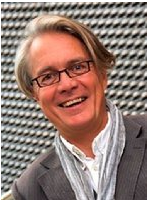
Stefan Kuhlmann was PI of the DiscGO project. He is emeritus professor of Science, Technology and Society (STS) at the University of Twente, the Netherlands. He works on research and technological innovation as social and political processes, focusing on governance and politics, and he publishes widely in the field of research and innovation policy studies. He was Academic Director of WTMC, the Dutch Graduate Research School Science, Technology, and Modern Culture (2018-2021). Prior he was professor of Innovation Policy at University of Utrecht (2001-2006), held leading positions at the Fraunhofer Institute for Systems and Innovation Research (Karlsruhe 1988-2006), and he was researcher at the University of Kassel (1979-1988).
Peter Stegmaier is co-PI on the incandescent light bulb (ILB) case in the DiscGO project and on the the DiscGO project. He is Assistant Professor at the Department of Technology, Policy and Society, section Knowledge, Transformation and Society (KiTeS) at the University of Twente, the Netherlands. His research interests besides discontinuation research include social theory and methodology, knowledge and normativity, theories of action and institutionalisation, phenomenology and neurology, and the sociologies of science, governance, innovation and citizenship, as well as that of music.
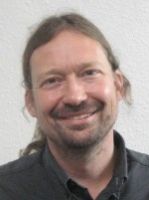
Andy Stirling is PI on the nuclear case in the DiscGO project. He is emeritus professor of science and technology policy at the Science Policy Research Unit (SPRU), University of Sussex, where he co-directed the ‘STEPS Centre’ for sixteen years. Working on issues of power, uncertainty and diversity in science and technology (especially around energy and biotech), he has served on a number of UK, EU and wider governmental advisory committees including (presently) as a lead author for the Intergovernmental Panel on Biodiversity and Ecosystem Services (IPBES) and external advisor to the independent evaluation of UK Government Nuclear Innovation Programme.
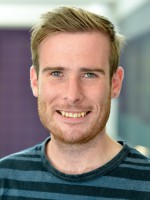
Phil Johnstone is Visiting Professor at the University of Tartu, Postdoctoral Researcher at the University of Utrecht, and Visiting Fellow at the University of Sussex. His work focuses on the political and democratic implications of sociotechnical change, spanning many interests including energy transitions, the role of the state in transitions, war, militaries and sociotechnical change, deep transitions, industrial policy, and discontinuation and phase-out governance. Phil has long-standing expertise on the topic of nuclear power.
Pierre-Benoît Joly, a STS scholar, is Directeur de recherche at the National Institute of Research for Agriculture, Food and Environment (INRAE) in France. He has been the Director of the IFRIS and of Labex (Laboratory of Excellence) SITES from 2009 to 2014, and the founding director of LISIS, a research Unit based at Université Paris Est from 2015 to 2019. Since January 2020, he is the Chair of the INRAE Center Occitanie-Toulouse. His research is devoted to the study of co-production of knowledge and social order. Drawing on a number of empirical studies on the interactions between science, democracy and the market, the aim is to analyse the contemporary transformations of the scientific public sphere and new modes of governance of innovation and risk. He is a member of the French Academy of Agriculture, and of the French Academy of Technology.
Marc Barbier is Research Director at the National Institute of Research for Agriculture, Food and Environment (INRAE) in France. He is the present Director of IFRIS and Labex SITES and director of the Graduate Program ‘Digital ad Innovation Studies’ at Université Gustave Eiffel and former director of CorTexT Platform. Involved in STS with longitudinal case studies approach of dispositives he has developed research on the alignments and dis-alignments of scientific knowledge and innovation process in agrifood systems following the emergence and effects of controversies, crisis, biosecurity, and sustainability transitions. Under the current anthropocenic challenge, he is devoted to research and politics on agroecological transitions and decarbonation of agriculture. He is also co-editor of the Revue d’Anthropologie des Connaissances journal.
Alix Levain is an anthropologist and research fellow at the CNRS. She has been part of several major interdisciplinary research teams addressing ecologisation processes in rural and coastal environments, and is currently the director of the joint research team Possible Seas : Human-driven transitions and retroactions in marine and coastal social-ecological systems (POSSEA) in France. Her research addresses the lived experience of environmental change, which she approaches mainly through ethnography and participatory research. Her current works and projects focus on changes in the sensitivity regimes and knowledge policies associated with confronting the destruction of familiar environments.
Frank Dedieu is researcher at INRAE. His research focuses on environmental policies. He has worked on the management of major crises and disasters (COVID 19), studying the production of knowledge and ignorance in the case of pesticides. More recently, he explores the sub-social and economic factors hindering ecological transition in the case of plastic pollution.
Fanny Pellisier is an expert in risk policies. She holds a PhD in sociology, combining the sociology of science and technology with the socio-history of public action, particularly in the area of pesticide management in France. Her research sheds light on how ecological transitions in agriculture are planned, disrupted, sustained, or impeded over time. Currently, she works on risk management and circular economy policies at the French Ministry of Ecological Transition.
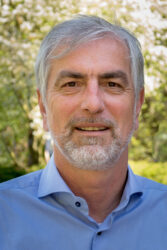 Johannes Weyer is professor of sociology of technology at TU Dortmund University (Faculty of Business, Economics and Social Sciences; Technology Studies Group). His work focusses on the governance of complex systems (e. g. aviation, road transportation, and energy systems), human-machine-interaction in highly-automated systems (e. g. aviation, space travel) and research on acceptance and trust in technology (e. g. big data, web 2.0). Apart from empirical methods to investigate users’ attitudes and network analysis, he also applies novel, experimental methods of agent-based modelling and simulation. Current research projects are, for example, “Collaborative Data and Risk Management for Future Energy Grids – A Simulation Study” (KoRiSim) and “Assessing Big Data” (ABIDA).
Sebastian Hoffmann studied economics and social sciences at TU Dortmund University (focus on sociology of technology) and acquired his master-degree in 2013. Currently, he is research fellow at the Technology Studies Group (Faculty of Business, Economics and Social Sciences at TU Dortmund University) and involved in the project “Collaborative Data and Risk Management for Future Energy Grids – A Simulation Study” (KoRiSim): Goal of the project is to combine insights from electric engineering and sociology in order to develop a common simulation framework for studying governance and energy consumption behaviour in a power distribution network. Between 2012 and 2015 he was part of the project “Governance of the Discontinuation of Socio-Technical Systems” (DiscGo) and investigated (political) attempts to discontinue the fossil-fuel-based automobility regime. His research interests entail transition research (e. g. energy and mobility), studies on technology acceptance, network analysis, and agent-based modelling and simulation (ABMS).